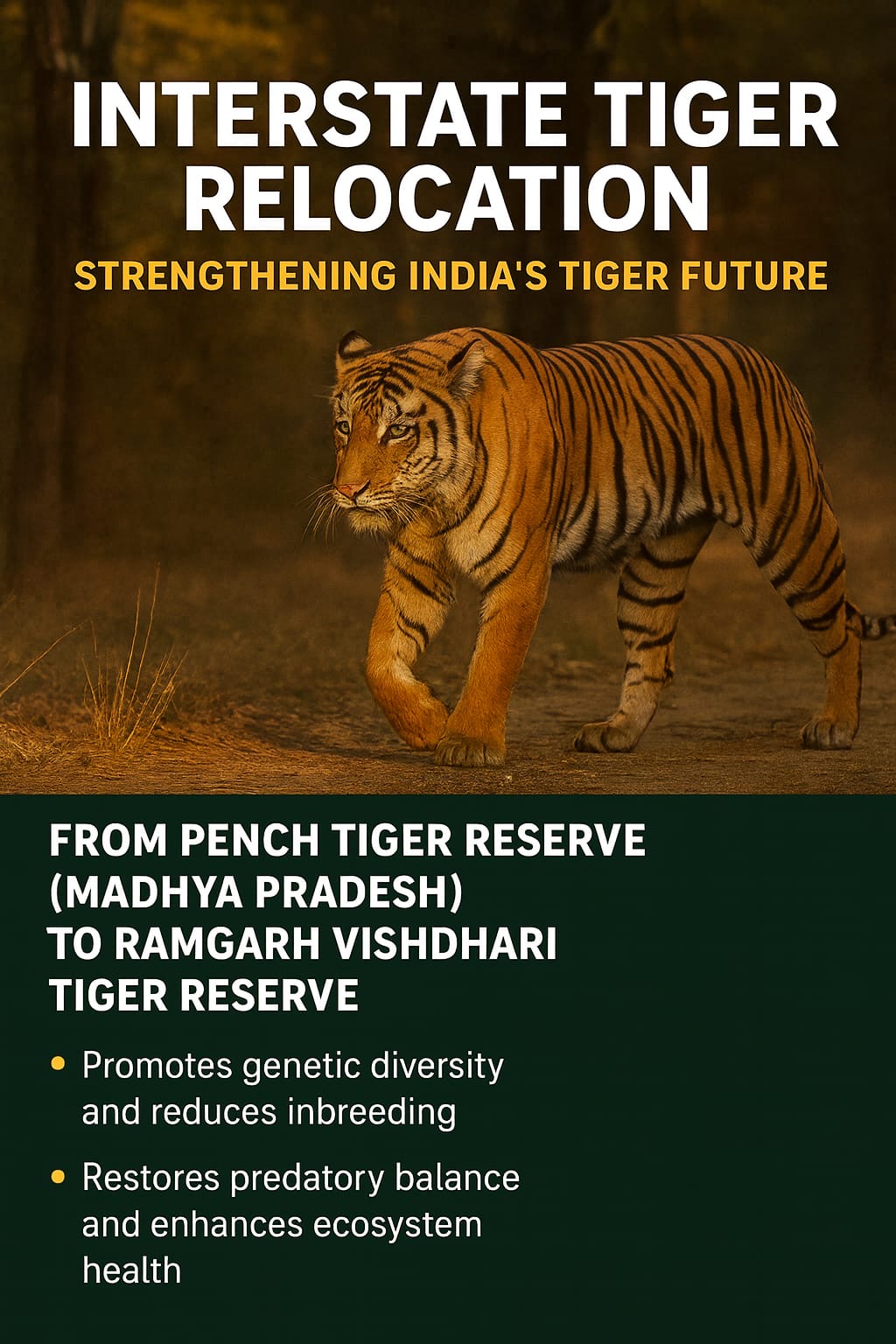
Learn why interstate tiger relocation from Pench to Ramgarh Vishdhari Tiger Reserve is vital for genetic diversity, healthy tiger populations, and conservation in Rajasthan.
From Pench Tiger Reserve (Madhya Pradesh) to Ramgarh Vishdhari Tiger Reserve (Rajasthan)
India’s tiger conservation success is not accidental—it is the result of science-led planning, long-term habitat protection, and one of the world’s most ambitious wildlife management programs. Among the most critical tools in this effort is interstate tiger relocation, a strategy that plays a vital role in maintaining healthy tiger populations across the country.
The relocation of tigers from Pench Tiger Reserve in Madhya Pradesh to Ramgarh Vishdhari Tiger Reserve (RVTR) in Rajasthan marks a significant milestone in strengthening Rajasthan’s tiger landscape and securing the long-term future of the species.
Why Interstate Relocation Is Necessary
Some tiger reserves, such as Pench, have reached near-optimal population levels. While this reflects successful conservation, high densities can lead to territorial conflicts, stress, and limited genetic diversity. Relocating select tigers to suitable but under-populated reserves like RVTR helps balance populations while reducing pressure on source reserves.
From a scientific perspective, genetic diversity is the backbone of a healthy tiger population. Introducing tigers from a different landscape prevents inbreeding, strengthens immunity, and improves reproductive success. This genetic exchange is essential for long-term survival, especially in newly notified or recovering reserves.
Impact on Ramgarh Vishdhari Tiger Reserve
Ramgarh Vishdhari Tiger Reserve, located in the Bundi district of Rajasthan, forms a crucial ecological corridor between Ranthambhore and Mukundra Hills. The arrival of tigers from Pench accelerates the natural revival of this landscape, helping re-establish predator-prey balance and restoring ecological stability.
Tigers are umbrella species. When a tiger thrives, the entire forest benefits—from prey species and vegetation to birds and smaller carnivores. Early monitoring data and field observations indicate positive signs of habitat utilization, territorial establishment, and improved ecosystem health within RVTR.
A Boost to Tiger Population Health
Relocated tigers are carefully selected, health-checked, radio-collared, and monitored continuously. This ensures minimal stress and maximum adaptability. Such translocations have proven successful across India, contributing directly to rising tiger numbers and stronger population resilience.
For Rajasthan, interstate relocation reduces over-dependence on a single reserve like Ranthambhore and creates multiple viable tiger populations, lowering extinction risk from disease, natural disasters, or human pressure.
Beyond Wildlife: Conservation and Community Benefits
A thriving tiger reserve also supports local livelihoods through eco-tourism, employment, and community engagement. As RVTR grows stronger, it becomes a model for how science-based conservation, community participation, and responsible tourism can work together.
A Vision for the Future
The Pench–Ramgarh Vishdhari relocation is not just about moving tigers—it is about rebuilding landscapes, restoring genetic strength, and securing India’s conservation legacy. With continued protection, habitat management, and responsible tourism, RVTR is poised to become one of Rajasthan’s most important tiger strongholds.
As someone who has spent four decades in India’s forests, I can say with confidence: interstate tiger relocation is one of the most powerful tools we have to ensure that the roar of the tiger continues to echo across our wild landscapes—for generations to come.